Why perfect demos don’t win customers
The demo was perfect.
You left the meeting thinking it was done, because your client nodded at the pain points your product solved, asked good questions and asked you to send the presentation so they’d have the full deck.
And then: nothing. Silence. Days. Weeks.There wasn’t a no. There wasn’t an “it’s expensive.” nor any objection you could rebut. And you, with your client not moving forward while you spend the whole night inventing theories: Is it the price? The timing? The proposal?
I’ll spare you the theories: it wasn’t any of that, at least not always.
I experienced this up close when I worked with a large corporation as a client of a truly powerful technology analytics product. One of those products that in just a few minutes puts the customer in that WoW state you know they’re enjoying seeing what you’re showing. One of those that impresses and is far beyond what the customer saw with their usual tools.
Meeting after meeting, the product shone, but meeting after meeting, nobody lifted a finger.
The product didn’t have a problem; rather, the product WAS the problem. It shone so brightly it blinded; the product was so good it didn’t sell, and a blinded customer doesn’t buy: they stay still. Like when you visit a big city with skyscrapers or endless views on the horizon that make you forget the ground beneath your feet.
Because wooing and selling aren’t the same. Sometimes they get in each other’s way.
The 80/20 rule
From that experience came one of the most useful rules I know for selling innovation and that you can also apply because you know it perfectly:
For a new idea to enter, the customer has to recognize 80% of the map and be surprised only by 20%.- The 80% is their territory: the problem they already know they have, the way they already solve it, the words they already use.
- The 20% is your lever: what changes the outcome in a visible and believable way.
Invert the proportion and you won’t get a rejection but something worse: a meeting that goes well and leads nowhere. You spend resources and on top of that you don’t get information; you end up begging by email for three months with the opening question in your head.
Why your brilliant product paralyzes
Here are three layers to keep in mind that no demo fixes and that aren’t in your product but in your sales, onboarding and retention strategy.
- Unlearning hurts more than learning. You’re not asking them to learn your tool, you’re asking something more uncomfortable: to acknowledge that their current way of working no longer works. And nobody does that happily, because what they have now works for them; maybe not well, but well enough to get the day-to-day work done. And “good enough” is exactly the excuse one repeats to themselves to avoid changing anything.
- The ego in the room. This isn’t in the deck. If your product reveals what the client’s team didn’t see, someone in that room looks bad in front of their boss, and live, on the call, that person won’t torpedo you openly; instead they’ll do nothing and want to get through this awkward moment as quickly as possible without looking back. And you, without an internal champion, your deal will die of starvation while you keep polishing the presentation.
- Impressing isn’t using. We showed what the product could do. What we didn’t do was put it into their daily routine: use it with them, on their real decisions, until it stopped being “the new tool.” They applauded us in the meeting, but nobody opened it the next day.
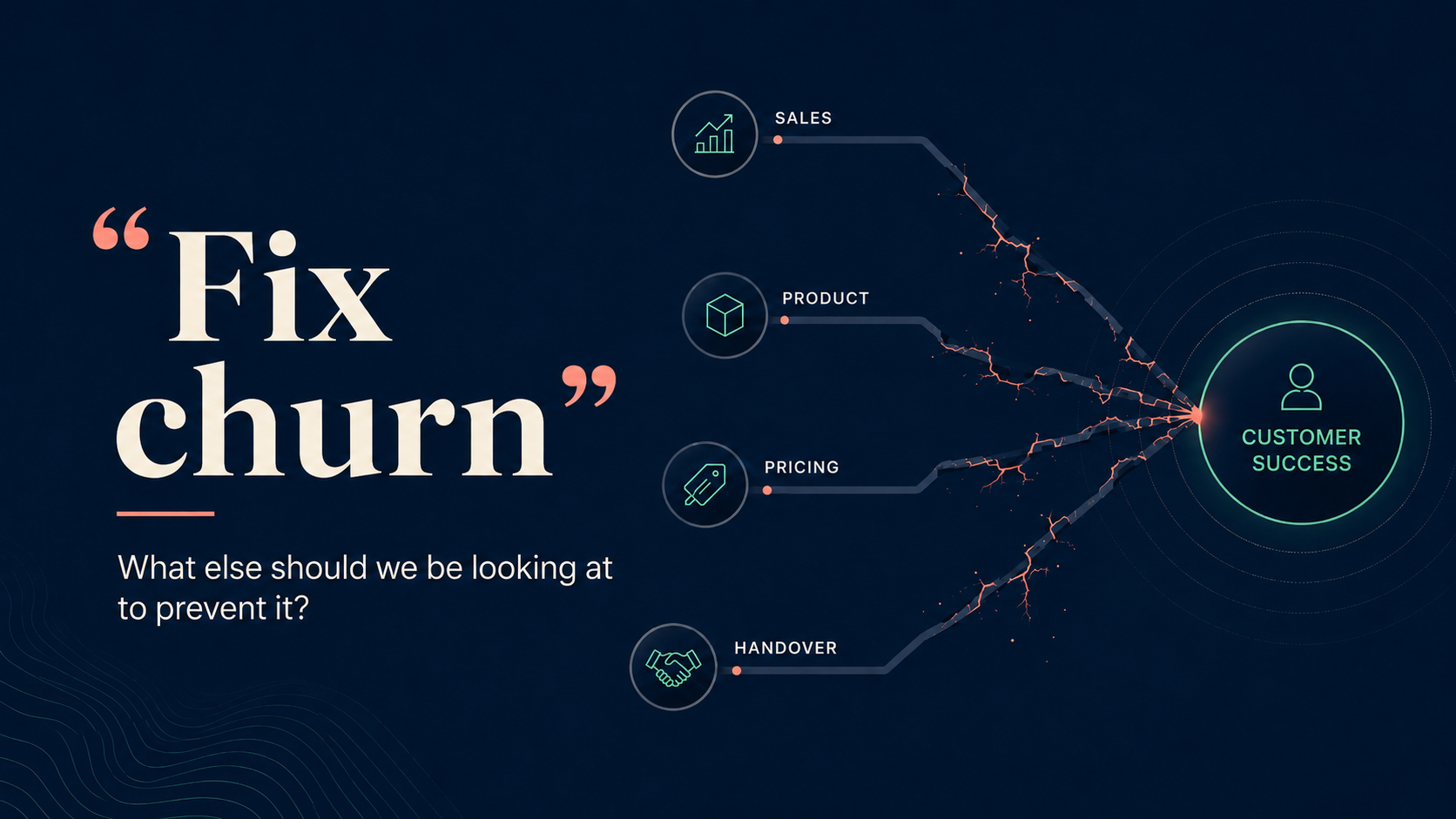
Notice? None of these three layers are fixed with more features, a better demo or more meetings. On the contrary: every brilliant demo widens the gap between what the customer sees and what they dare to assume.
You’re enlarging the problem with your best tool and wearing down the relationship.
What to do (today, not at the next funding round)
- Audit your pitch with the rule. Take it and mark it line by line: how much is THEIR map and how much is YOUR novelty? If the novelty dominates, you don’t have a pitch you have a lecture; and lectures get applause, they don’t get purchased.
- Design for the ego, not just the user. Before each meeting: who in this room looks bad if this works? That person needs a dignified exit; make the discovery look like “something the team’s data already showed,” so the merit of adoption is theirs. If your product makes someone look inept, that person is your invisible brake and if they’re in every meeting, churn becomes visible. On the other hand, if you win them, you have a champion inside your client.
- Swap demos for decisions. Adoption doesn’t start when the customer understands your product, it starts when they decide something real with it, even a small decision, but theirs. If your next meeting ends without a decision made by the customer using your tool, it wasn’t a progress meeting, it was another slide show.
The underlying takeaway
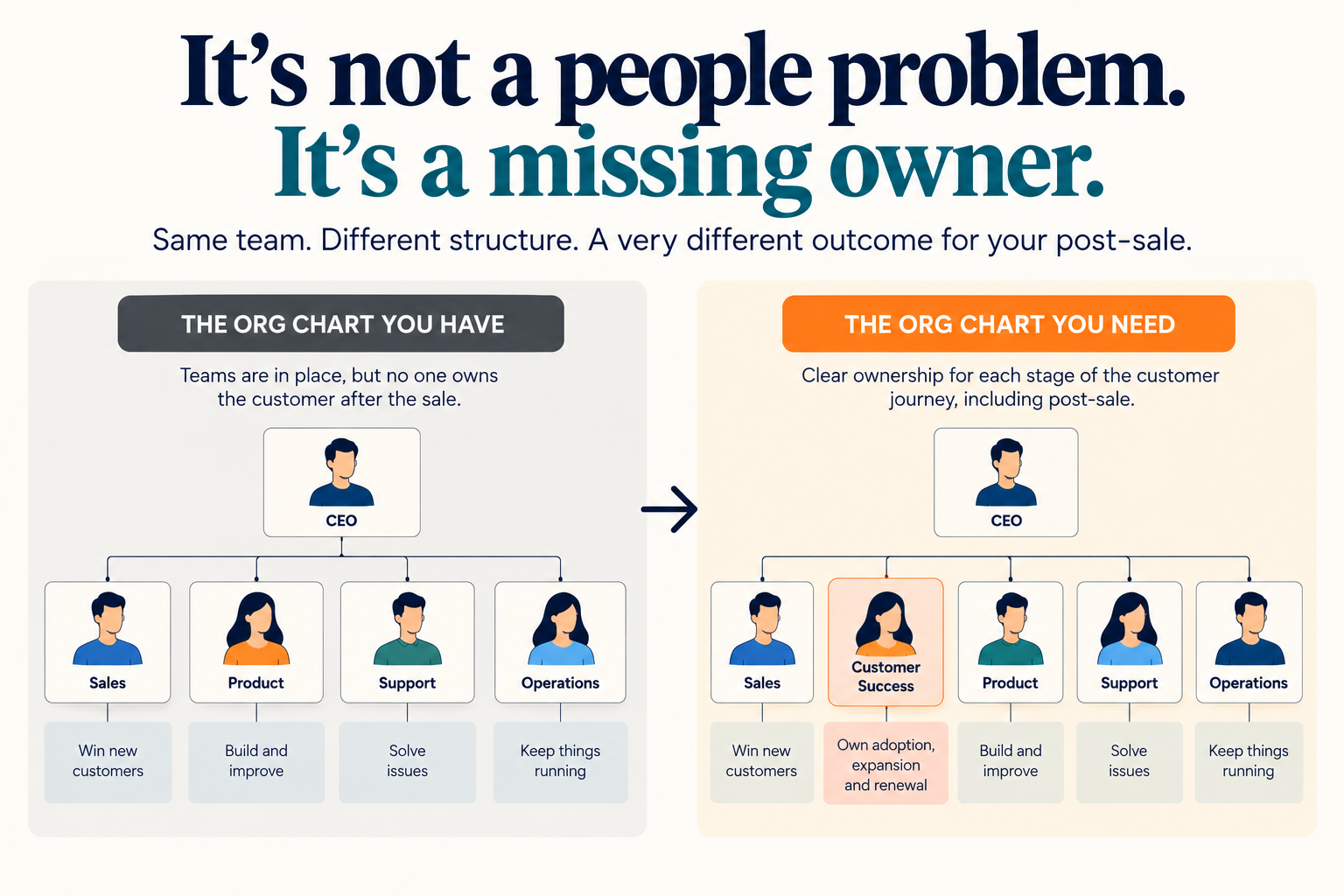
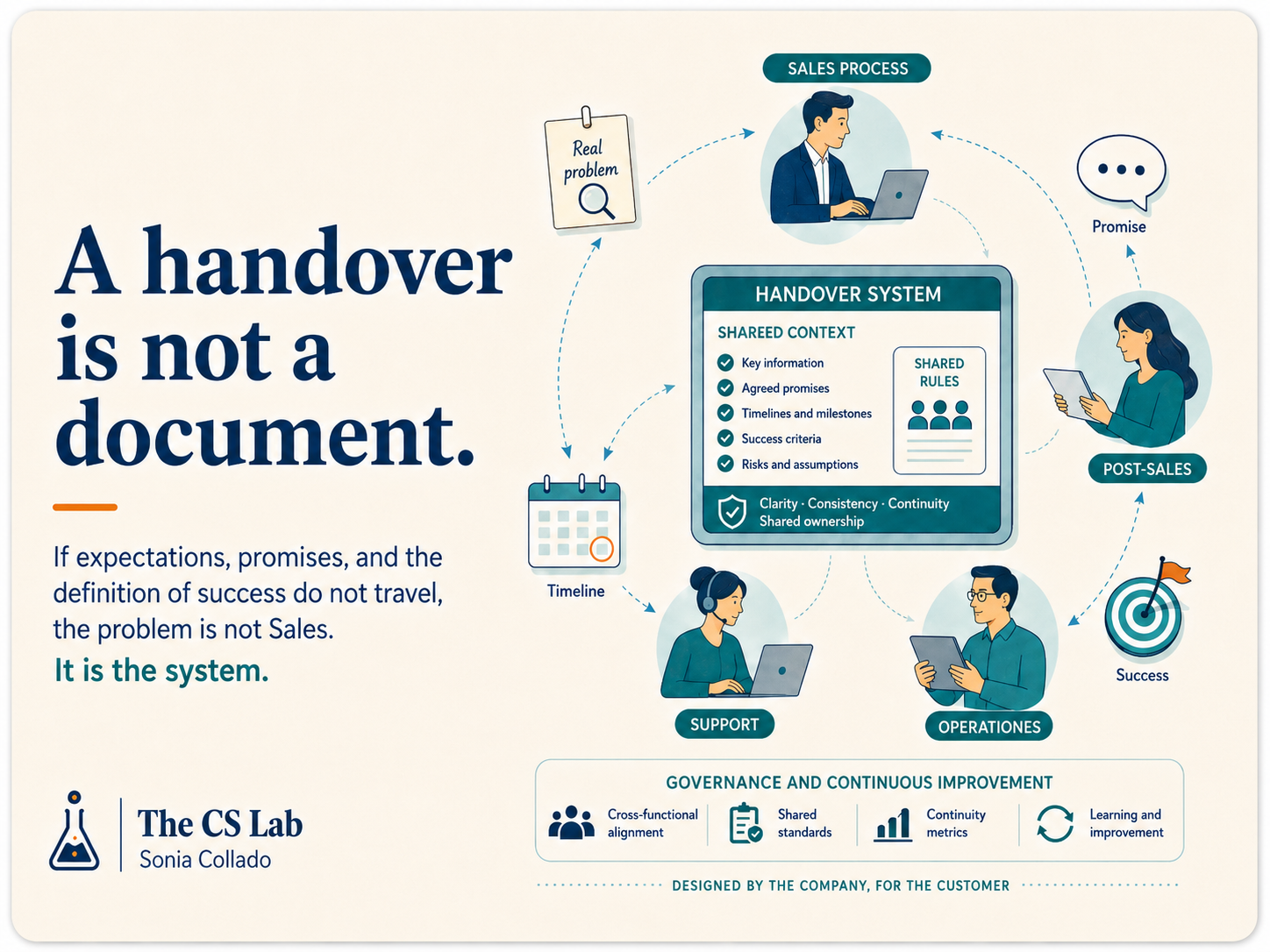
It’s the same thing I repeat for after-sales, in sales version: the problem is almost never the product or the people, but the missing bridge between the value you generate and the customer’s real operations.
A product that shines in the demo and doesn’t change decisions doesn’t fail in product, it fails in the bridge — and bridges aren’t improvised meeting by meeting, they’re designed.
And now the final question:Write to me and tell me about your case.How many customers do you have right now who are in love and standing still? How many of those paralyses are the three layers above?
Artículos relacionados