The Silos That Traditional Team Building Doesn’t Fix
Last weekend, I took part in my first Decision Room and, when I got home, I repeated the exercise by myself. And not because we almost didn’t finish the exercise due to the debate 🙌🏻, but because I couldn’t get it out of my head.
The format is simple to explain:
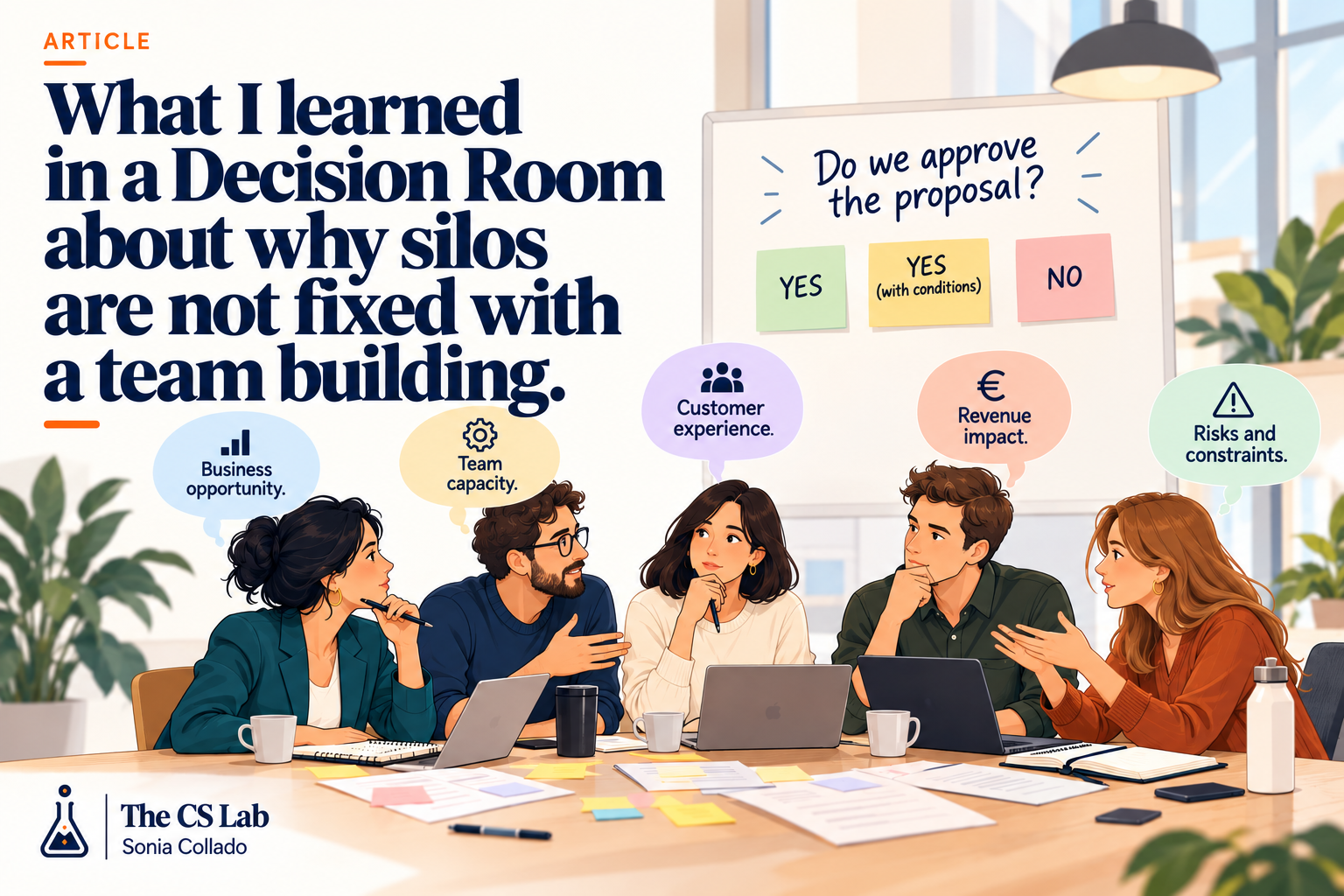
- Teams of 5 people (odd numbers are always better to avoid “ties”)
- A business case
- A C-level question that needs to be answered: Do we approve the proposal? Yes, no, or yes, but with conditions
From there, different ways of interpreting the same problem start to emerge: what each person prioritizes, what constraints they’re seeing, what information they’re missing, and what they’re taking for granted.
The interesting part of the session wasn’t the case to be solved, but seeing how five people with exactly the same information reached different conclusions, and how each one was right from where they were sitting.
And during the evening exercise, the one I couldn’t get out of my head, I realized something I’ve been seeing in companies for a long time.
The Silo Isn’t a Relationship Problem
I’ve heard the same idea expressed several times within companies: “we should do some kind of activity so the team can get to know each other and collaborate better.” And this is where team buildings begin, with a meal outside the office, a communication workshop, or the typical after-work gathering. And yes, people appreciate it and come back in a better mood, but on Monday they return to the same routine.
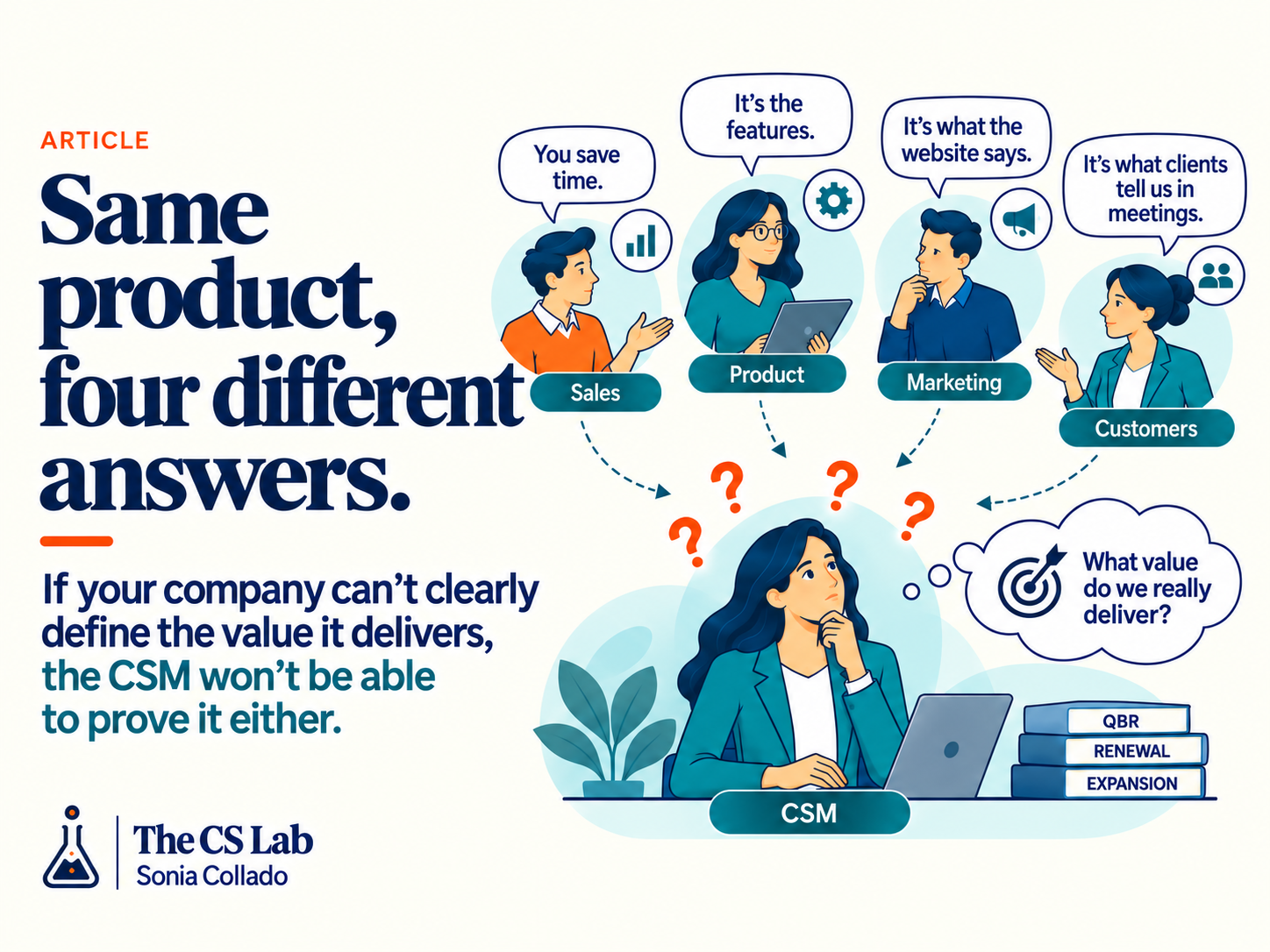
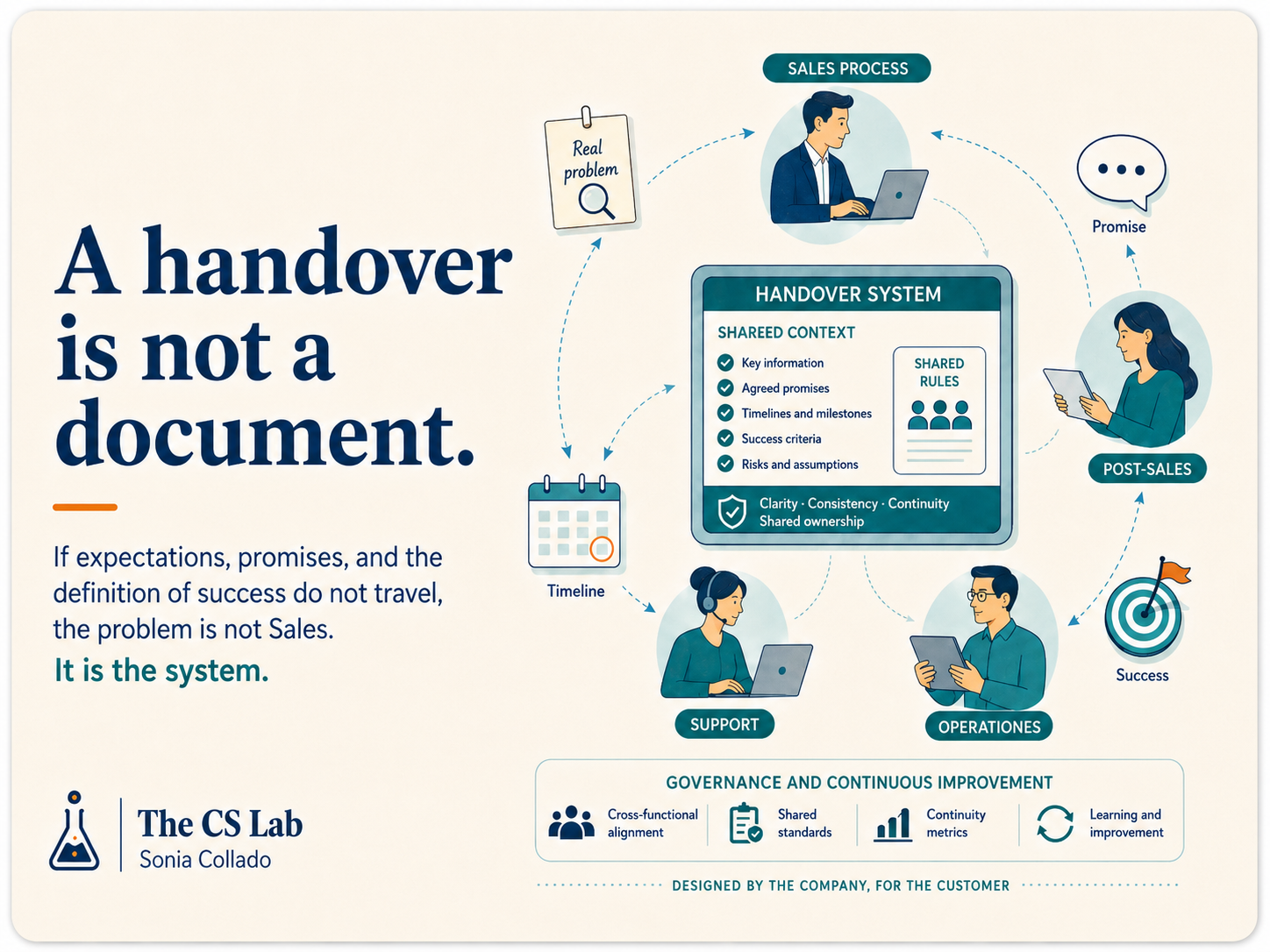
Sales goes back to promising a timeline that Implementation can’t meet, Support keeps prioritizing by SLA without knowing that the account renews in six weeks, and Product once again dismisses a request without having any idea how much ARR is behind it. And this doesn’t happen because they’re individualistic or anything like that; it’s mostly a problem of context, not empathy.
That’s why the idea that “team buildings don’t work” resurfaces in departments. Yes, they had a good time, but if there are no further actions, that’s where it ends.
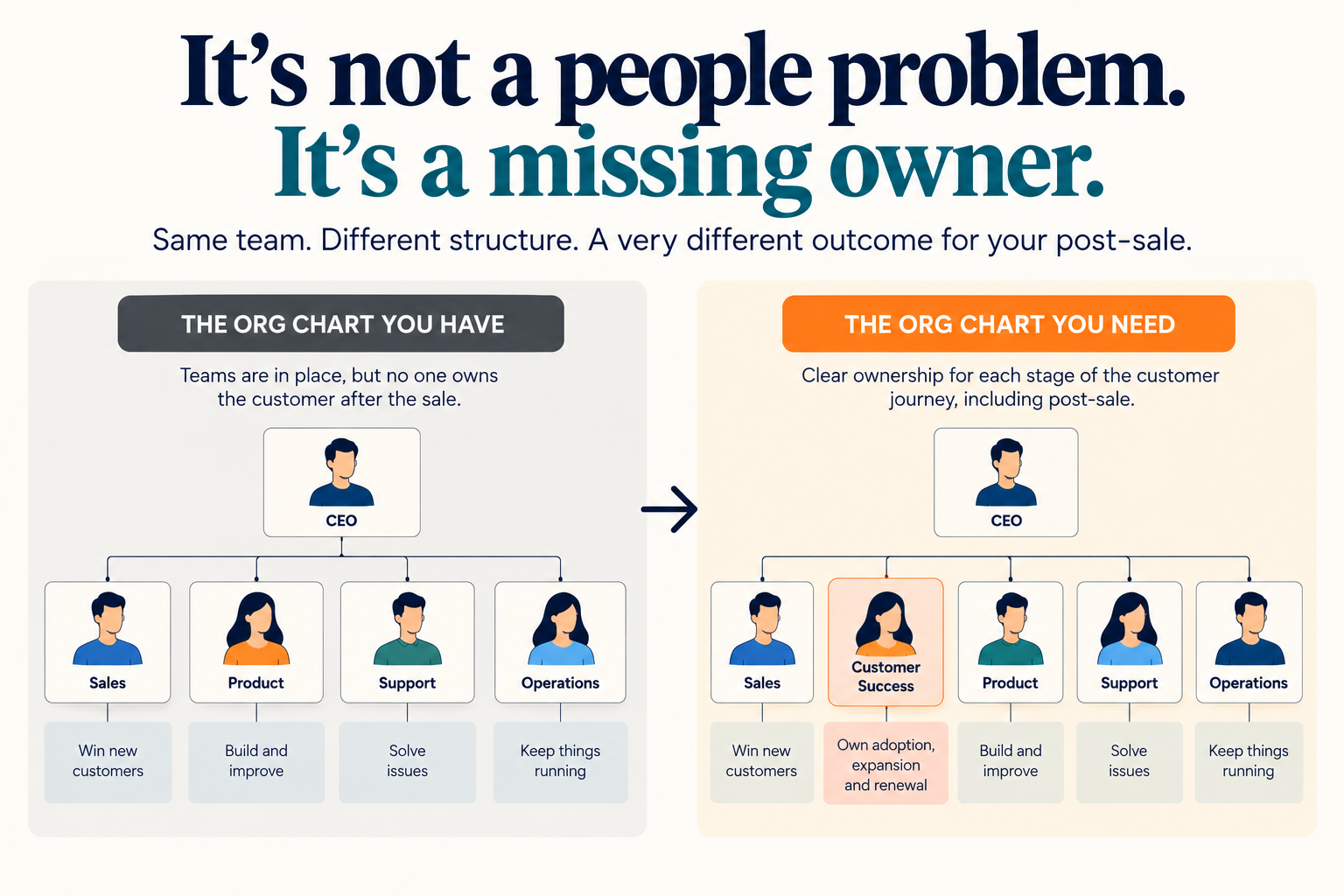
And nobody doubts that their colleague is a good person; what they don’t know is what they’re deciding against: they don’t know their constraints, their deadlines, what they’ll be held accountable for, or what breaks on their side when you optimize yours. And with that incomplete information, each person makes the best decision possible from where they are, from within their team. As you can see, everyone is acting correctly, but together they work badly, and team building or getting together doesn’t solve this.
And these decisions aren’t made in an executive committee; they’re made every day at a manager’s desk, where decisions are made with whatever is in front of them, which is almost never everything they need.
Why a Decision Room Does Something Different
What caught my attention was seeing how, when we had to decide together, what each person was taking into account, taking for granted, and hadn’t even seen started to emerge. And that made me think about how many times this happens between departments without us stopping to talk about it. When you take it into that setting, three things happen:
- You see the cost of each decision on the other side. When you have to argue from someone else’s seat, you discover that their usual “no” wasn’t resistance; it was a real constraint you weren’t seeing.
- The missing information emerges. As soon as you have to make a real decision, everything nobody has comes to the surface: what was promised during the sale, what capacity there really is, how much that account matters, the company’s expansion strategy, the team’s actual capacity… And that, which is an uncomfortable twenty-minute exercise, is what happens in your company every week without anyone naming it.
- There’s a decision at the end. Not a summary of nice learnings, but a yes, a no, or a maybe. And what comes out in the exercise as discomfort and a “I’m not sure” is what your company experiences every week without you knowing it.
One example that caught my attention: in one of the exercises, I looked favorably at the customer data, since satisfaction was good and that’s what you see in a report if you read it superficially. But if you look closely, there was an upsell and renewal ratio—and a NO upsell or renewal ratio—that was painful. In addition, what about the capacity of the people handling it? Were they on the verge of burnout?
A Decision Room Doesn’t Fix Silos
I want to make this clear, because otherwise it might seem like I’m selling snake oil: if you run this activity and on Tuesday everyone goes back to their routine, you’ll have done a team building that’s “cooler” than usual and little more.
What it does, and it’s no small thing, is make visible the differences from which we’re making the same decision: what information each person needs but doesn’t have, what constraints they’re taking into account, and which assumptions they haven’t checked. When you apply it to teams from different areas, it can also help you detect dependencies and coordination gaps.
And you won’t see this in any report at your company, because you look at your numbers and they’re green, the person next to you looks at theirs and they’re fine too, and while everyone keeps fulfilling their own responsibilities, the customer notices the seam. These gaps can become visible when you ask people to make decisions together about a specific case and ask them to explain what they’re taking into account.
That said, the exercise can give you very valuable clues about what to review, but it only truly works if someone then redesigns something. The exercise gives you the map, but what needs to change is the system.
And I say this because I’ve seen wonderful activities end with a group photo and a document that nobody ever opened again. The difference comes when you leave with a clear idea of what needs to change, and Bizea does this very well.
So if this resonated with you, the format is run by Karina De La Puente Iriarte and Gloria Martínez Llabrés with BIZEA!, and it’s absolutely worth experiencing.
And if, as happened to me, this makes you think about how the teams at your company collaborate, you may see something you already suspected more clearly. The frustrating part comes afterward, when you realize that changing it means sitting down with other teams you don’t manage.
Now, if what you’re missing is someone who can sit down with those teams and turn what you discovered into something that works, write to me and we’ll talk.
Have you ever done an exercise like this at your company? I’d really like to know what came out of it and, above all, whether anything changed afterward.Artículos relacionados