The more you grow, the more support you need… or not? What Linear reveals about how to better design your system
A few days ago I found myself reading about Linear and it wasn’t the typical story of “aggressive growth”, massive hiring or the usual playbooks, but quite the opposite.
It told how a small team with an obsessively well-crafted product had managed to get so far, and as I read, I had a feeling that there was something different about how they’re designing the system.
I started pulling on the thread.
I read growth analyses, product breakdowns, UX articles (I’ve left some of them below)… And little by little it stopped being a story about a tool and became a reflection on how we build companies.
1. When the product stops needing explanation
In many SaaS products, the pattern repeats over and over:
- the user doesn’t understand something → opens a ticket
- the team responds → patches it
- and the cycle repeats
But in this case, Linear puts something very powerful on the table. Create a product that prevents problems. How? Reading between the lines reveals the following pattern: clean experience, clear decisions, and speed as a priority.
The result isn’t “less support”. It’s less need to ask for help.
And that changes everything in how they structure their company.
2. When work isn’t divided, it’s understood
Another thing that caught my attention wasn’t what the product does… but how that “friction” that usually exists between departments is reduced because everyone understands the system they work in.
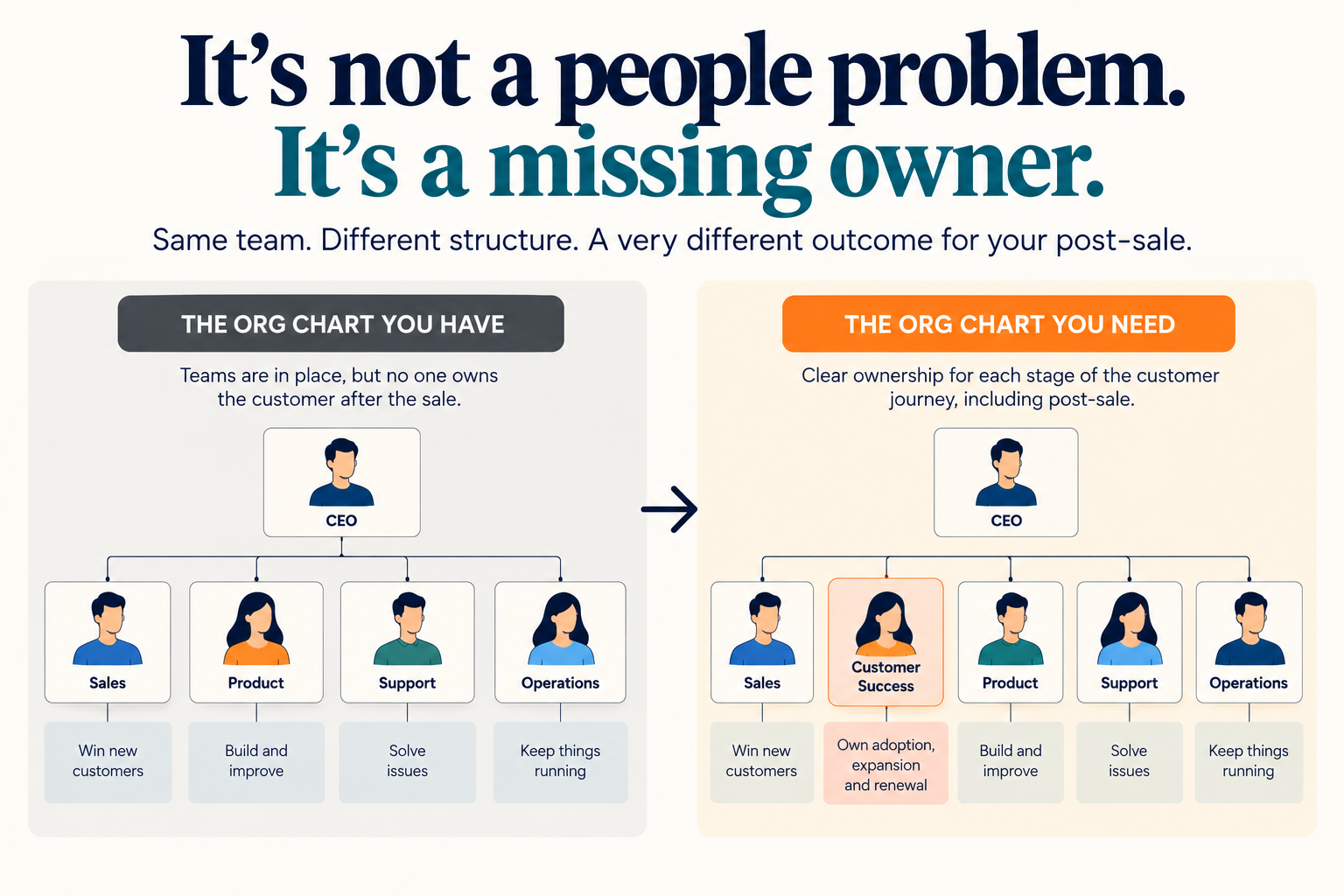
They were building an organization with fewer layers, avoiding that forced coordination of “now this part belongs to your department and not mine” and avoiding the question that sometimes becomes recurrent: who is responsible for this?
And when a company is understood as a whole, where each department is a single piece and its involvement has repercussions on the final product, everyone gives their best, since they see the big impact and the shared success.
3. When saying “no” simplifies everything
How many times we hear about the importance of knowing how to say NO and how many times we don’t apply it…
And in companies, especially if you’re close to the customer, there’s a constant temptation in the product “to improve it”: to add more “features” to serve more people and be more competitive in the market. Sound familiar? You’ve probably suffered it.
But that sometimes brings the opposite: more complexity, more doubts, more friction… and an expense or investment which, I warn you, sometimes doesn’t pay off.
Often less is more, I repeat: less is more.
If you already do something different from your competitor, you already have positioning. You don’t need to have 100 more features than your competitor; you need some that are truly necessary in the market and that you do very well so that switching to your product is worthwhile. And the fewer ad hoc features your product has, the less configuration, lower cost, faster incident resolution and greater clarity for your team, product and customer.
Because when you try to adapt the product to everyone, you lose focus. Doesn’t the phrase “when everything is important, nothing is”? It’s kind of similar.
And here Linear does it very well. They don’t try to adapt to everyone. They define a way of working, processes and product… and they do it well.
4. When technology isn’t the center (even though everyone talks about it)
Another point that made me think was how they’re integrating new capabilities (yes, AI too), and there’s something curious here because while many companies are rushing to add features just because it’s the trend, if those “features” aren’t needed due to trend, they add them when they fit and add value.
And this, although it sounds simple, isn’t so easy if you work on product because it implies saying no again. It implies being clear about your product, and understanding what truly adds value and what only adds noise, brings even more complications and distractions, and increases the learning curve of your product.
As you can see, everything here coordinates with what came before: if the product is clear, the user won’t get lost → and if they don’t get lost, they don’t need help.
5. When efficiency isn’t optimized, it’s designed
This is where, for me, the real lesson of everything I’ve learned reading about Linear lies.
Many companies try to be more efficient by optimizing processes, including automation and even hiring better people, but few ask themselves this question beforehand:
👉 what if the problem isn’t how we operate, but what we’re forcing to operate?
Because if your product generates friction:
- you need support
- you need coordination
- you need meetings
- you need more people
But if you reduce that friction through design:
- the product absorbs part of the work
- the customer moves forward on their own
- the team stops firefighting
6. What’s really behind it (and it isn’t so obvious)
After analyzing various pieces of content about Linear, the feeling is quite clear:
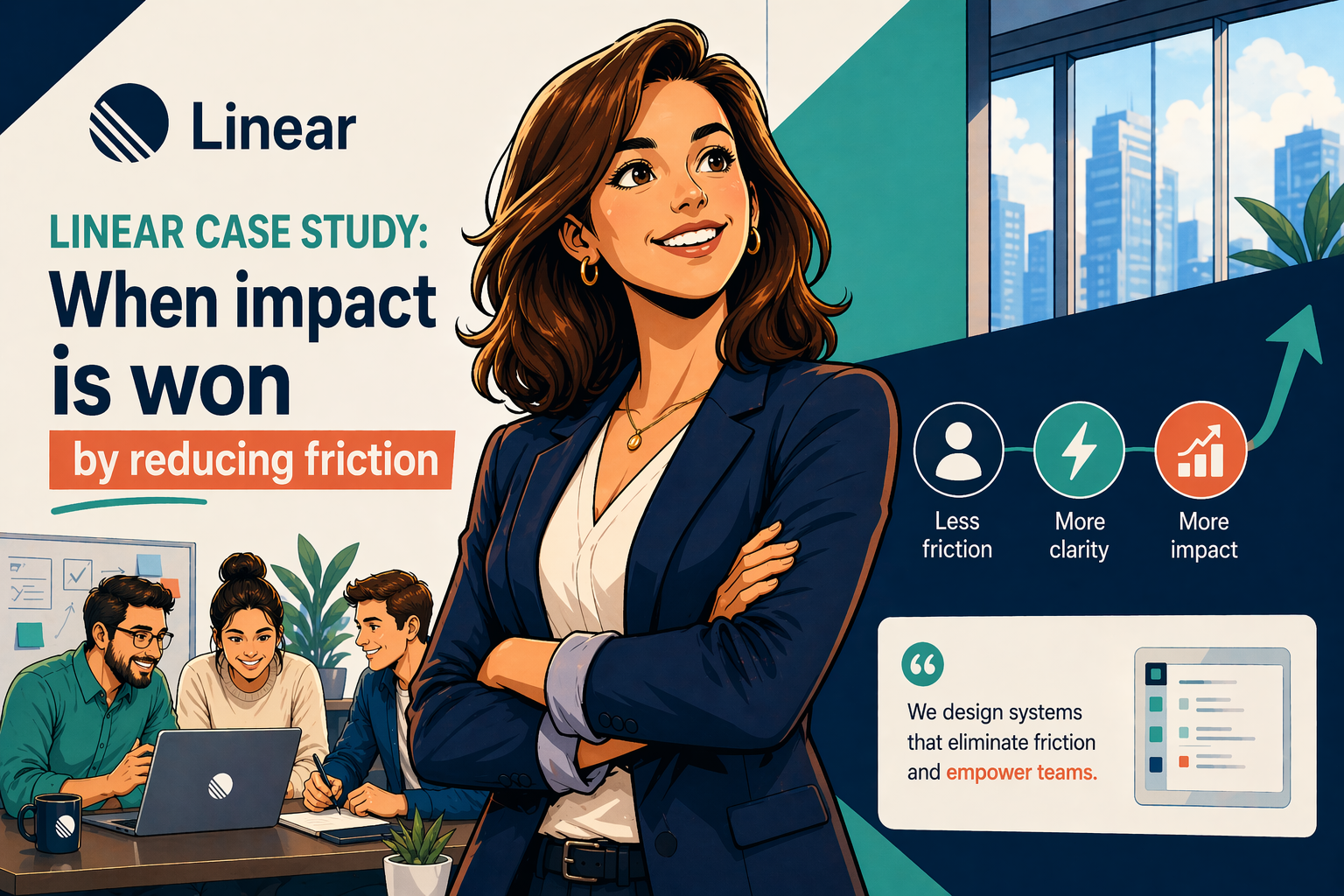
They haven’t just built a good product, they’ve built a system that avoids generating unnecessary work.And this completely changes how a company operates internally:
- fewer tickets isn’t just less load → it’s less noise
- less friction isn’t just better UX → it’s less internal dependency
- less intervention isn’t just efficiency → it’s real scalability
Because in the end, everything is connected and the customer is also more satisfied.
Final thought.
Linear didn’t eliminate Customer Success but it has greatly reduced the need for it to be reactive because it has time for what’s important: to think, to be strategic, to know where to put all its attention and focus to grow.
And this, if you work in product, support or CS, is pretty uncomfortable to accept… because it changes the conversation and your role in the company since:
It’s no longer about: 👉 how we respond better
It’s about: 👉 why we have to respond so much and how we actually reduce it to add value.
Here’s a question for you, because here’s the key point:
Is your product reducing friction… or is it generating work that your team then has to absorb and you only grow by hiring?
Sources and references: (I’ve left some pages here where you can read more about Linear.)
Artículos relacionados