Advanced negotiation techniques
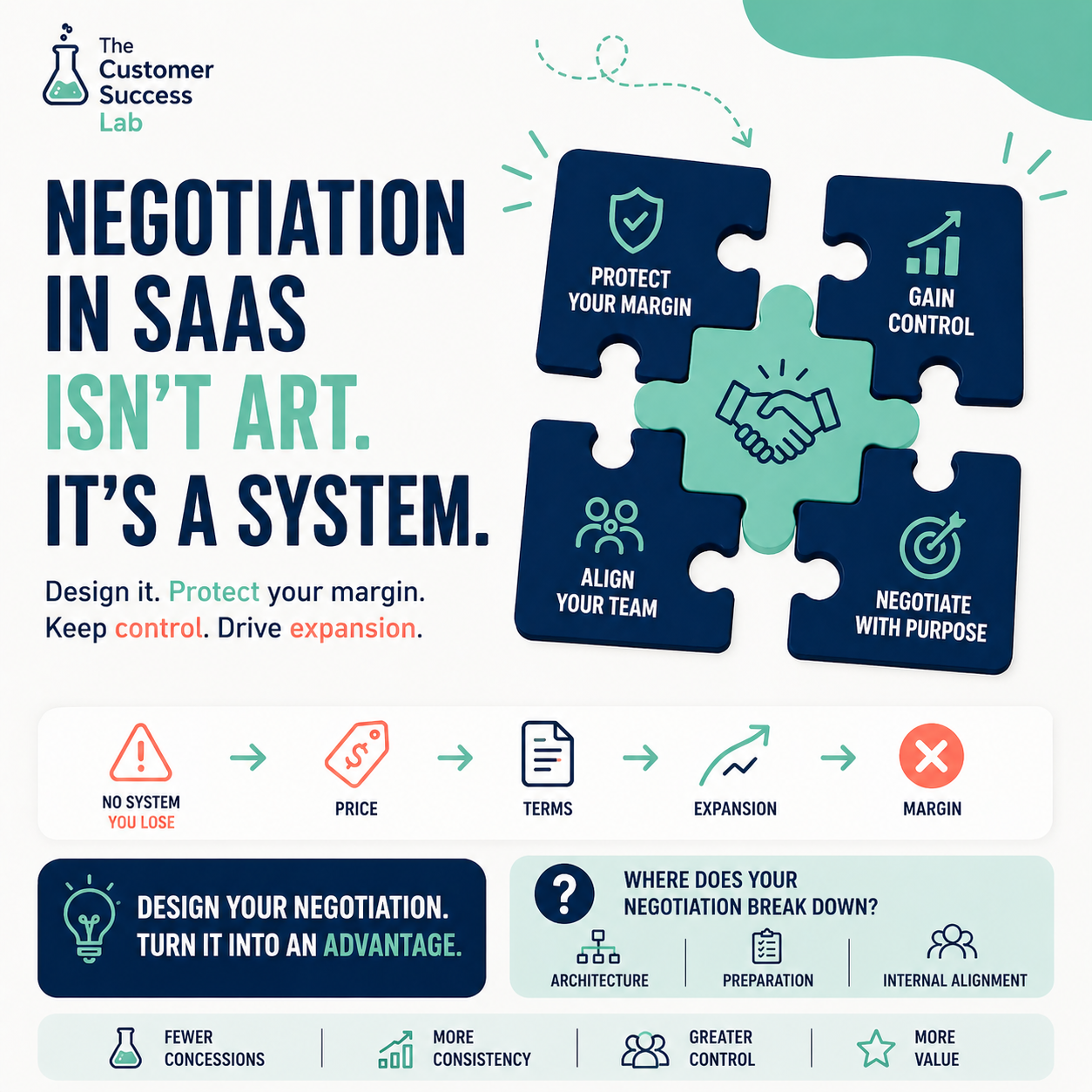
Anyone who believes negotiation in SaaS is “art” and not a system is probably giving away margin and control.
Negotiation isn’t a series of improvised meetings with the customer, where everything depends on the person, the moment and the relationship, because if you look a bit deeper, you’ll see that it’s part of the business architecture, part of Customer Success and should be treated as a deliberate lever and not as a meeting.
Hasn’t it happened to you that a large account asked for special terms in its renewal and, instead of a clear process, with each conversation you found yourself with less room to negotiate?
- Price erosion.
- Loss of some terms.
- Loss of your own expansion
And on the renewal day, you realize that too much margin has been decided away and it happened negotiation by negotiation.
I remember talking about this with an Account Manager, and so I bring it here today.
The problem isn’t how you negotiate. It’s how the system is designed
Just a few days ago, while listening to a great podcast walking the dog, I realized that we should give more weight to this crucial point and that episode forced me to think:
¿What would happen if we designed negotiations the way we design onboarding, the adoption cycle or the incentive structure?
What if we had a playbook that was part of the operating model, not an individual skill?
From tactical to systemic: the 7 key pieces
1) Architecture: who negotiates and when
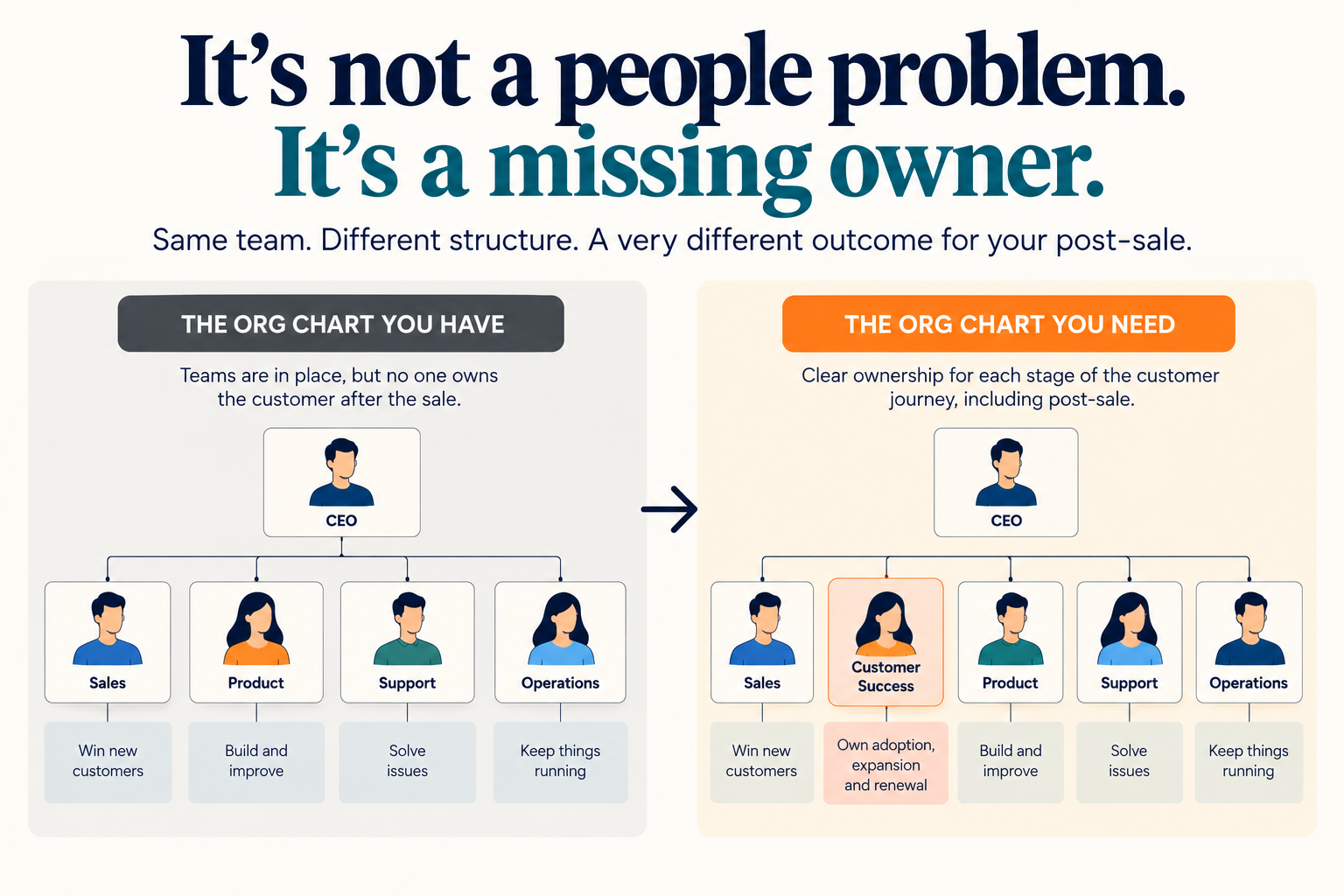
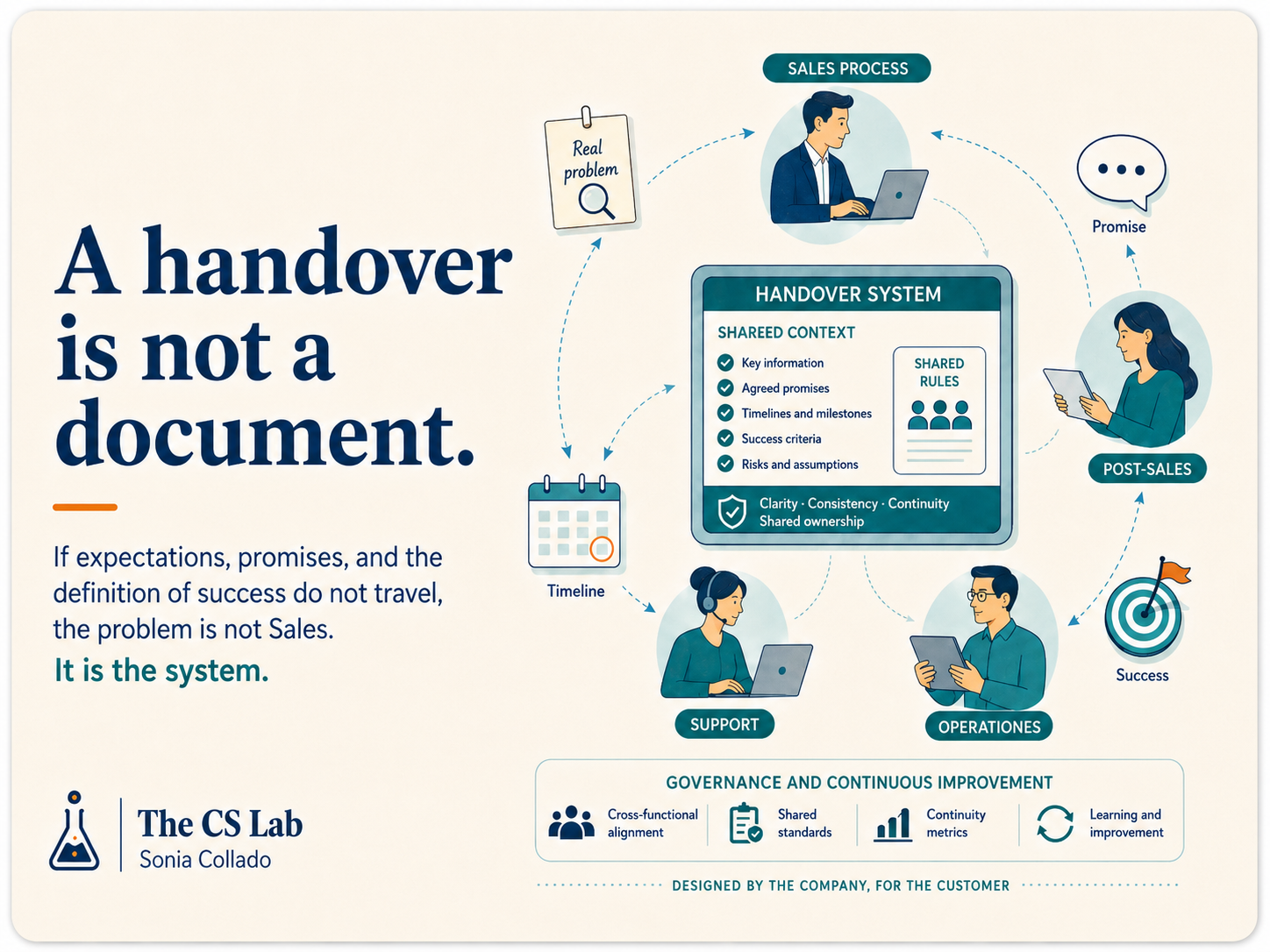
One of the biggest sources of inconsistency is the role of each function in the relationship:
- CS protects the relationship
- Sales/AM protects the commercial dimension
- Legal/Finance protects the boundaries
Also, setting automatic triggers such as churn risk, ARR under review, or requests for contractual changes will help you know how to act and who else should intervene. Remember we’re a team and each person has a part of “their truth” with the customer. Don’t leave it to the judgment of a single person.
Why it matters: without architecture, every negotiation is an exception. Exceptions become precedents.
2) Define the outcome before entering the conversation
Many negotiations start with a vague intention: “renew”. But renewing isn’t enough:
- Before the first meeting, map out: who makes the decision, who recommends, what levers of power they have.
- Define the desired outcome: not just “renew”, but acceptable margins, expansion clauses or a shared roadmap.
The question you should have clear: what loss of value am I willing to accept to keep the account?
3) Design offers, don’t apply discounts
One of the most common mistakes is lowering price too early, and an alternative we can work on is:
- Structure offers: Bundle functionality, SLAs, advanced training, and value-based pricing.
- Use anchoring: present the high-value option first; the proposal you want them to accept then appears reasonable.
Technique: propose three options with clear trade-offs. Don’t let price be the only axis of the conversation because the negotiation simplifies and you lose margin
4) BATNA and negotiable limits
Every negotiation needs two things that are rarely clear, because… what happens if there’s no agreement? How far are you willing to concede?:
- Define your BATNA (alternative in case of no agreement) and communicate it internally. Point out limits: minimum margins, non-negotiable clauses, payment terms.
- Document possible concessions and the “cost” of each concession: impact on ARR, precedents, resources required.
Because without alternatives you concede, and without limits, you concede too much.
5) Contract template and “red lines”
Another point where a lot of control is lost is the contract, and if every negotiation means starting from scratch: cycles lengthen, inconsistencies arise, exceptions that are hard to reverse are created and, most importantly, the relationship wears out.
Therefore: - Have a “standard clause” for renegotiations and a library of redlines approved by Legal and Finance. - Automate versions and keep a history of changes by customer type.
This reduces time and prevents small exceptions from becoming norms.
6) Training and scenarios
Training negotiation isn’t about memorizing answers; it’s about preparing the team to operate within a system:
- Regular roleplays with real cases: complex renewals, strategic customers, technical negotiations. - Use qualitative metrics: value argument used, level of concessions, level of internal alignment.
Training isn’t about repeating scripts; it’s about getting the team used to operating within the architecture.
7) Post-mortem and continuous learning
And each negotiation should leave a trace and be left as shared learning. Because we all fail and success is about learning fast and taking action so it doesn’t happen again.
- What was negotiated
- What was conceded
- What precedent was created
Because what today is an exception, tomorrow is an expectation.
Two micro-moments that change the conversation
There are small interventions you can use that have impact.
- “Before talking about price, allow me to confirm what concrete impact your committee expects to see in the next 6 months.”
- To set boundaries: “We can adapt terms if we align this with an expansion plan that covers the cost of the concession.”
If you manage CS thinking in individual tactics, you’ll lose consistency, but if you design it as a system, you turn every negotiation into learning, a standard and a source of competitive advantage.
Before you go, one more useful question:
👉 Where does your negotiation fail today: in the architecture, in the preparation or in internal alignment?
#CustomerSuccess #SaaSNegotiation #CSStrategy
Artículos relacionados